AT1032S Test Sequencer
The Ultimate General-Purpose Test Platform with 32 I/Os, Programmable Power, and Full Communication Support
The AT1032S Test Sequencer is a comprehensive automated test equipment solution designed for functional PCBA testing, system validation, and firmware verification. With 32 programmable analog/digital I/Os, 8 dry contact relays, programmable power supply, and extensive communication interfaces (USB, CAN, Ethernet, RS232, RS485, I2C, SPI, UART), the AT1032S eliminates the need for building custom test fixtures from scratch. It connects to a computer (Windows, Linux, MacOS) via USB or Ethernet and is controlled through comprehensive APIs supporting Python and NodeJS.
- Flexible I/O Configuration
- API first: Python, NodeJS, C
- For test jig or office use
- Daisy-Chain Scalability
32 programmable I/Os for both analog and digital signals with ±25V range
Each of the 32 I/O pins can be configured as digital input/output or analog input, supporting voltage ranges from -25V to +25V for inputs and 0 to 24V for outputs. Configurable threshold levels (VIH/VIL) and output levels (VOH/VOL) make the AT1032S adaptable to virtually any testing scenario, from ultra low 1.0V logic to 24V industrial systems.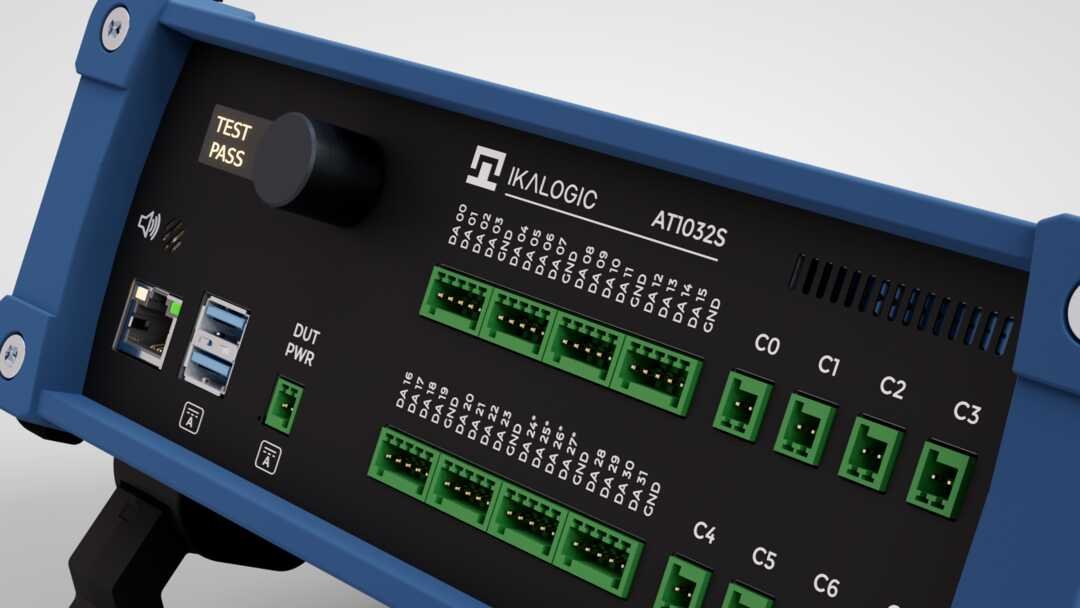
Create test sequences in minutes with intuitive, well-documented APIs
The AT1032S is built from the ground up to be API oriented. It features comprehensive interfaces for Python, NodeJS, and C, allowing you to quickly develop automated test sequences. Whether you're a Python enthusiast or prefer JavaScript/TypeScript, the APIs provide the same powerful functionality with clear, consistent syntax across all supported platforms. Explore AT1000 API DocumentationAll contacts accessible from the back panel for easy wiring to test fixture
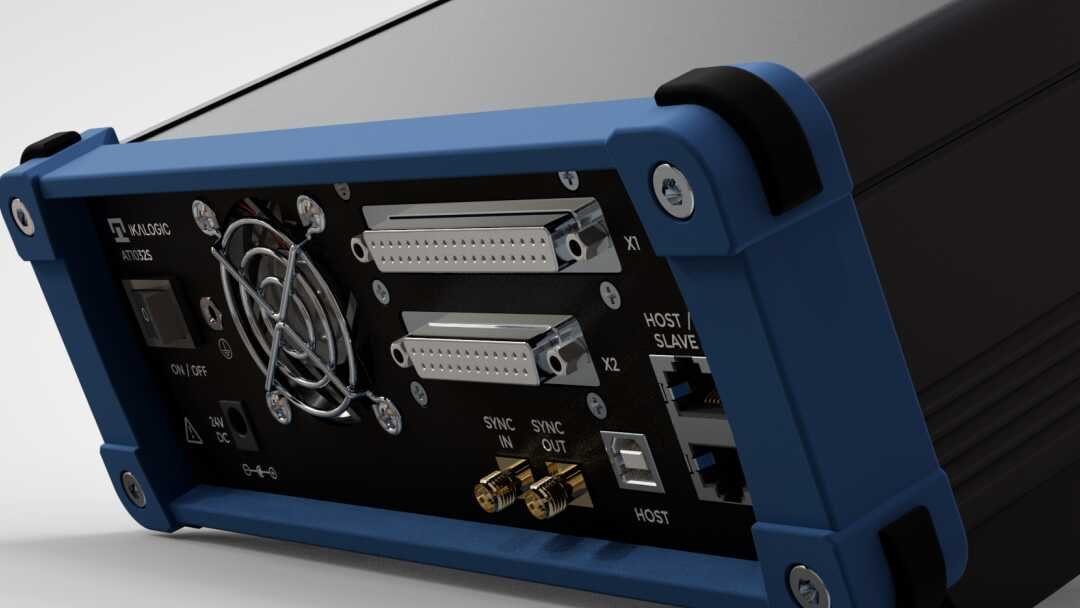
The AT1032S is designed with practicality in mind. In addition to front panel connectors, all I/O pins, relays, power supply, and communication ports are accessible from the back panel via standard connectors (one DB37 and one DB25). This makes it easy to validate your test sequence in the office, then migrate seamlessly to the industrial test fixture for production environments.
Scale your test system by daisy-chaining multiple AT1032S units
Need more I/Os? No problem. The AT1032S features SYNC IN and SYNC OUT ports that allow multiple units to be daisy-chained together, expanding your test system as your requirements grow. The API transparently handles multiple devices, making it easy to control hundreds of I/Os from a single test script.
See how to design a daisy-chained test system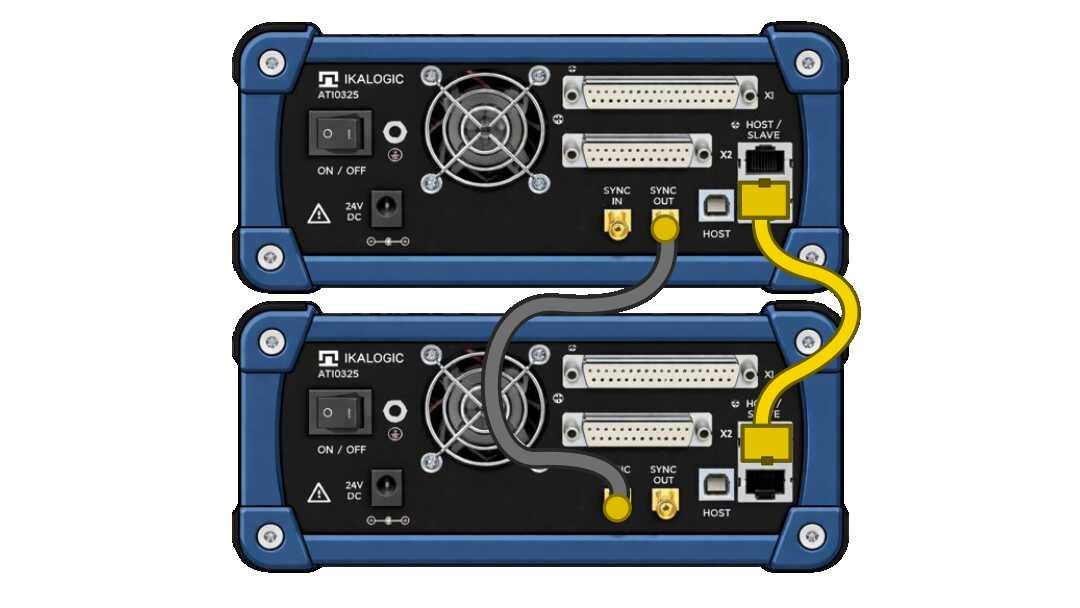
What can AT1032S do ?
Explore some of the unlimited possibilities with the AT1032S
Applications
- Functional PCB Testing: Automate comprehensive testing of assembled PCBs
- Semiconductor Validation: Accelerate validation of ICs with programmable signal generation and capture
- Communication Protocol Validation: Test USB, CAN, RS232, I2C, SPI, UART interfaces
- Power Supply Testing: Validate power management circuits and battery chargers
- System Integration Validation: Validate complete systems with multiple subsystems
- Firmware functional testing: Automate firmware verification after flashing
Benefits
- All-in-One Solution: Combines multiple test functions in a single device
- API-First Design: Easy integration with Python, NodeJS, and C
- Flexible I/O Configuration: Adaptable to a wide range of testing scenarios
- Scalable Architecture: Daisy-chain multiple units for expanded capabilities
- Precise Measurements: High-resolution current sensing on key outputs
- Stand-alone or Remote Operation: Run tests with or without a PC connection
Get your AT1032S now!
Build a scalable, repeatable automated test system with ease using the AT1032S Test Sequencer.
AT1032S
- 32 Programmable I/Os
- 8 Dry Contact Relays
- Programmable Power Supply (0-13V, 2A)
- USB, CAN, RS232, I2C, SPI, UART
- Daisy-chain multiple units
Frequently Asked Question
Why not just use an arduino or raspberry pi?
You could build a basic test setup with an Arduino or Raspberry Pi, but there are several reasons why the AT1032S is a far superior choice for automated testing:
While Arduino and Raspberry Pi are versatile platforms, they lack the specialized hardware features required for comprehensive automated testing. The AT1032S offers 32 programmable I/Os with wide voltage ranges, 8 dry contact relays, a programmable power supply, and built-in communication interfaces (USB, CAN, RS232, I2C, SPI, UART) that are specifically designed for test and measurement applications. Additionally, the AT1032S provides precise current measurement capabilities and is built to operate reliably in industrial environments, making it a more suitable choice for professional testing scenarios.
How can i connect my device under test to the AT1032S
The front pannel of the AT1032S provides easy access to all 32 I/O pins, 8 relays, and the programmable power supply via screwless terminal blocks (Wurth reference 69138100000X).
All needed terminal blocs are included with the AT1032S device.
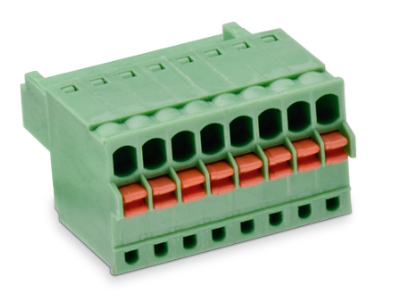
This allows you to quickly connect your device under test (DUT) for prototyping and validation. When moving to production, you can use the back panel DB37 and DB25 connectors to wire the AT1032S into your test fixture for a more robust and permanent connection.
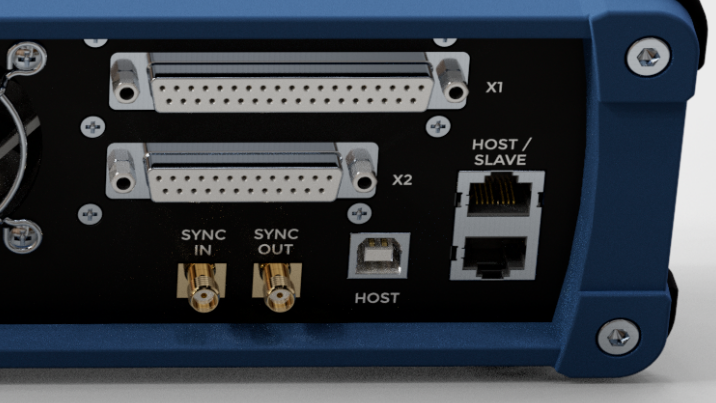
What if I need more than 32 I/Os?
The AT1032S is designed to be scalable. You can daisy-chain multiple units together using the SYNC IN/OUT ports, allowing you to expand your test system as needed. The API supports controlling multiple devices seamlessly, so you can manage hundreds of I/Os from a single test script without any additional complexity.
Further more, if you need to synchronize the outputs of multiple AT1032S units, the SYNC IN/OUT ports allow you to do so with precise timing, ensuring that all connected devices operate in unison during your test sequences.
How does AT1032S communicate with the host PC?
AT1032S is build upon standard ethernet and TCP/IP protocols. Just connect the AT1032S to your computer via USB or Ethernet, and use the provided API libraries (Python, NodeJS, C) to communicate with the device.
If connecting to your computer via USB, the AT1032S enumerates as an ethernet adapter, allowing you to use standard networking protocols to communicate with it. This approach ensures compatibility across different operating systems (Windows, Linux, MacOS).
Can we use AT1032S to load a firmware into our device?
Mostly yes, but it depends on the specifics of your device and programming requirements.
It totally depends on the programming interface of your target device. If your target device supports standard communication protocols such as UART, SPI, I2C, or CAN for firmware loading, then you can definitely use the AT1032S to facilitate the firmware programming process as part of your automated test sequence.
If you're using a third-party programmer that connects via USB, you can control the programmer from your test script running on the host PC, while using the AT1032S to set up the necessary test conditions before and after programming.
If you need further assistance on integrating firmware loading into your test sequence, feel free to reach out to our support team for guidance.
What makes AT1032S unique among competitors?
The first time we decided to build the AT1032S device, the main reason was that we could not find any existing product that met all our requirements for a general-purpose test sequencer. Many existing solutions were either too specialized or too expensive compared to the budget medium scale projects, where $USD 100K+ investment couldn't be justified.
We needed a low cost, general-purpose test sequencer that is flexible enough to handle most of our test requirements, yet able to scale up when needed, and the AT1032S was born out of that need.