AT1032S Example Applications
Each example below is a complete, working test sequence: a diagram of what is wired to what, and the whole program in Python and NodeJS, ready to copy onto your bench. They cover the jobs the AT1032S is built for, from a production-line functional test to a Modbus network poll, and every one of them runs on a single device.
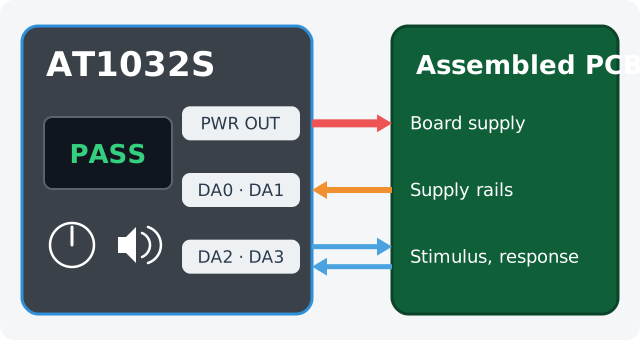
End-of-line functional test
Power the board, measure its rails, exercise one logic path and show pass or fail on the front panel. No PC in the fixture.

Mixed-voltage logic in one script
1.8 V logic and 24 V field I/O driven and read from the same device, with no level shifters in between.
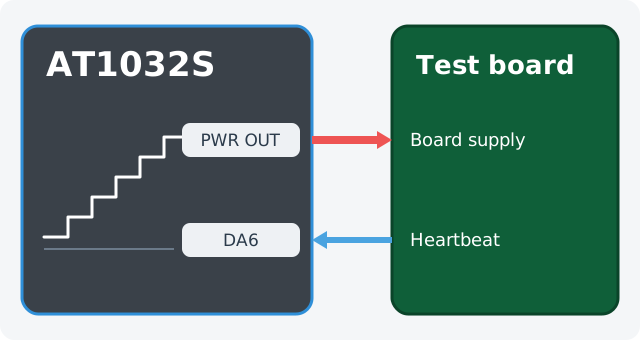
Operating-range validation
Step the supply across the board's range, record consumption at every point and find the exact brown-out voltage.
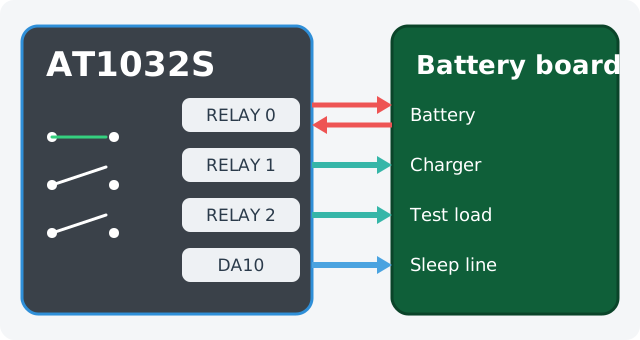
Battery charge, idle and sleep current
Relay 0 sits in the battery lead and measures both directions down to one microamp, while the dry contacts switch the charger and a load.
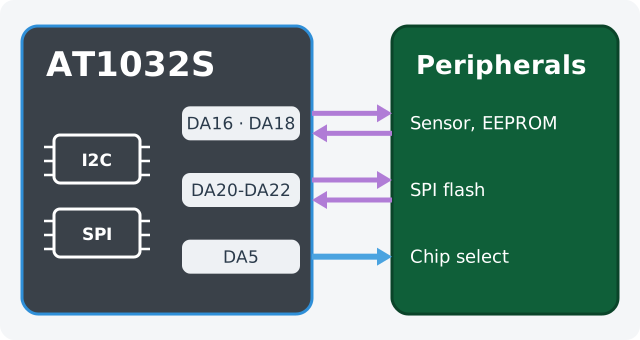
I2C and SPI peripheral verification
Scan the bus, read an ID register, write and read back an EEPROM page, all at the board's own logic voltage.
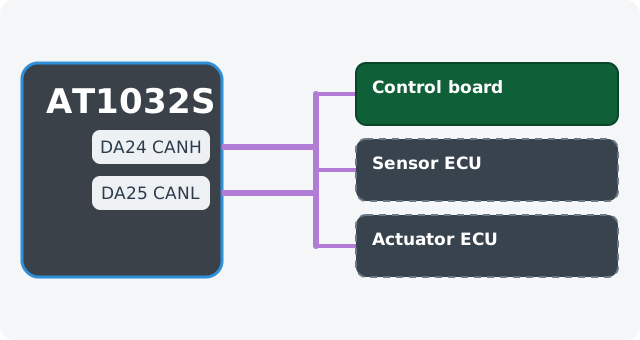
CAN node emulation and conformance
Check the board's replies, then stand in for the ECUs that are not on the bench so it runs as if the machine were around it.
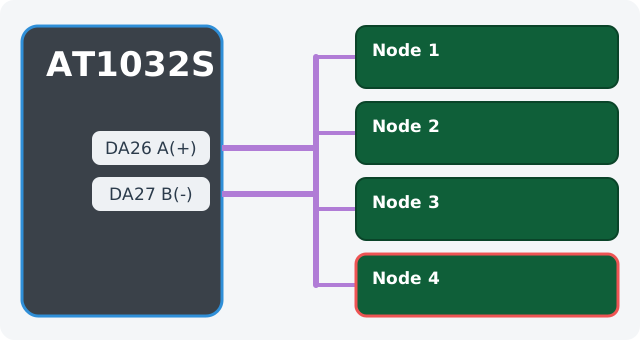
RS485 multi-drop network poll
Modbus RTU to every node on the bus from the built-in RS485 port, naming whatever stays silent.
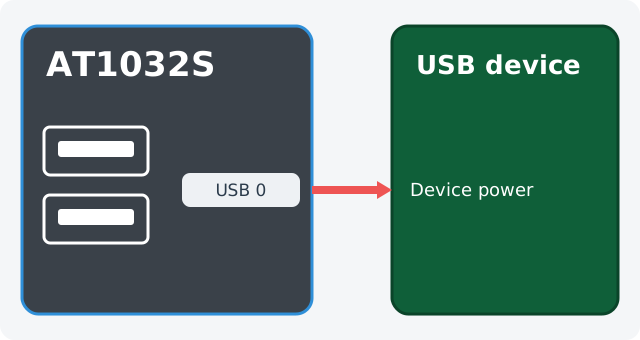
USB power-cycle reliability test
Switched port power and built-in current measurement turn an overnight reliability run into a loop.
Where these examples run
Every script here runs unchanged in two places. During development it runs on your PC and reaches the AT1032S over Ethernet or USB. On the production line the same file is loaded onto the device and started from the front panel, so the fixture needs nothing but power and the board under test.
To get set up, install the Python or NodeJS package and open your first connection:
Getting started with the API Full API documentation
Something else in mind?
If your test does not look like any of these, it is probably still a good fit. Tell us what you need to measure, stimulate or automate, and we will help you design the sequence, the interface cables and the fixture around it.